Technologies & Connectivity
Modern vehicles have evolved far beyond simple mechanical transportation. They now function as connected computers on wheels, integrating navigation systems, smartphone apps, over-the-air updates, and advanced driver assistance features that fundamentally change how we interact with our cars. For drivers in Quebec and across Canada, these technologies offer particular advantages—from navigating harsh winter conditions to optimizing energy consumption during sub-zero temperatures—but they also introduce new considerations around privacy, subscription costs, and system reliability.
Understanding the landscape of automotive connectivity means exploring everything from the navigation systems guiding your daily commute through Montreal traffic to the remote commands that pre-heat your vehicle on a frigid January morning. This comprehensive examination covers the essential technologies reshaping the driving experience, the practical trade-offs drivers face, and how to optimize these systems for real-world Canadian conditions.
Connected Navigation and Intelligent Route Planning
Navigation technology has transformed from simple GPS devices to sophisticated, cloud-connected systems that adapt in real-time to traffic conditions, weather events, and even your personal driving preferences.
Native Systems Versus Phone Mirroring
Drivers today face a fundamental choice: rely on their vehicle’s built-in navigation or use smartphone mirroring technologies like Apple CarPlay and Android Auto. Built-in systems offer deeper integration with vehicle functions—accessing real-time fuel or battery range, climate controls, and sometimes superior screen quality. However, they often require paid updates and may lack the frequent improvements that smartphone apps receive. Phone mirroring, conversely, provides constantly updated mapping data and familiar interfaces but depends entirely on your cellular connection and phone battery.
For Quebec drivers navigating frequent construction zones or seasonal road closures, the currency of map data becomes particularly critical. Smartphone-based solutions typically excel here, updating routes within days as conditions change, while built-in systems might lag by months unless configured for automatic updates.
AI-Powered Traffic Prediction and Route Optimization
Modern navigation platforms leverage artificial intelligence to analyze historical traffic patterns, current conditions, and even predictive data about events or weather. These systems learn that Highway 40 through Montreal typically slows between 7:30 and 9:00 AM, or that Route 132 experiences delays after snowfall. By processing millions of data points from connected vehicles, these platforms can suggest alternative routes before you encounter congestion.
For electric vehicle drivers, this technology extends to range optimization, calculating routes that account for elevation changes, temperature effects on battery performance, and charging station availability—particularly valuable during Quebec winters when cold temperatures can reduce range by 20-40%.
Smart City Integration: Parking and Urban Infrastructure
Cities across Quebec and Canada are deploying intelligent infrastructure that communicates directly with connected vehicles, transforming mundane tasks like finding parking into streamlined digital experiences.
Open Data for Parking Solutions
Municipalities including Montreal, Quebec City, and Ottawa now publish open parking data that third-party apps can access. This information includes real-time availability in municipal lots, street parking regulations that change with snow removal schedules, and even predictive analytics about where spaces typically open at specific times. Drivers who learn to utilize these data streams through apps can save significant time and reduce the frustration of circling blocks searching for spots.
Smart Parking Meters and App-Based Payment
The evolution from coin-operated meters to connected payment systems offers tangible convenience: pay from your phone, extend sessions remotely, and receive notifications before your time expires. However, this transition introduces choice complexity. Some cities use proprietary apps, others work with third-party platforms, and certain smart meters accept multiple payment methods. Understanding which systems operate in your frequently visited areas prevents the common scenario of downloading multiple parking apps with stored payment information across different platforms.
Adapting to Intelligent City Infrastructure
Beyond parking, connected vehicles increasingly interact with traffic signal systems, dynamic speed limits that adjust for conditions, and infrastructure that communicates road hazards. Winter operations in Quebec provide a compelling example: some municipalities broadcast snow removal schedules that connected navigation systems can interpret, automatically routing you away from streets being cleared or alerting you to temporary parking restrictions.
The Connected Vehicle Ecosystem: Features, Costs, and Privacy
Vehicle connectivity offers remarkable convenience—unlocking doors from your phone, scheduling charging sessions, receiving maintenance alerts—but these capabilities come with ongoing costs and important privacy implications.
Understanding Subscription Models and Data Plans
Many connected features require active subscriptions beyond the initial vehicle purchase. Remote start might be free for three years, then cost a monthly fee. Navigation updates could operate similarly. Data plan timing matters: some manufacturers offer better rates during promotional periods or when bundled with other services. Canadian drivers should particularly scrutinize cross-border data usage if they regularly travel to the United States, as roaming charges can accumulate quickly for connected services that continuously transmit vehicle data.
Over-the-Air Updates and System Evolution
OTA update capability allows manufacturers to improve your vehicle remotely—fixing software bugs, adding features, or updating safety systems without dealership visits. While convenient, this technology requires understanding: updates consume cellular data (typically performed over Wi-Fi when possible), may temporarily disable certain features during installation, and occasionally introduce unexpected changes to familiar interfaces. Configuring your vehicle to download updates on home Wi-Fi prevents data plan consumption and ensures updates occur at convenient times rather than unexpectedly in parking lots.
Balancing Convenience with Data Privacy
Connected vehicles generate extraordinary amounts of data: location history, driving patterns, harsh braking events, even which features you use most frequently. This information enables useful services but also creates privacy considerations. Manufacturers may share anonymized data with third parties, insurance companies increasingly offer programs that monitor driving behavior for discounts, and in certain jurisdictions, this data can be subpoenaed.
Quebec drivers should understand what data their vehicle collects, who accesses it, and how to manage sharing permissions. Most systems allow you to:
- Disable location tracking when not using navigation services
- Opt out of marketing communications based on driving data
- Request data deletion when selling or returning a leased vehicle
- Review privacy policies for connected app services separately from the vehicle itself
Connectivity Challenges in Remote Areas
Canada’s vast geography means cellular coverage remains inconsistent outside urban centers. Connected features that depend on constant cellular connection—remote commands, real-time traffic, streaming audio—may fail in rural Quebec, Northern Ontario, or anywhere between major highways. Understanding which features function offline (downloaded maps, locally stored music, basic vehicle controls) versus those requiring connection prevents frustration and helps you plan accordingly for trips beyond reliable coverage areas.
Mastering Your In-Vehicle Interface
The screens and controls connecting you to vehicle technology significantly impact both usability and safety. Optimizing these interfaces reduces distraction and improves the overall driving experience.
Touchscreen Technologies and Cold Weather Performance
Most modern vehicles use capacitive touchscreens—the same technology as smartphones—which respond to electrical properties of your finger rather than pressure. These offer excellent responsiveness and image quality but present challenges in cold climates. Capacitive screens may respond slowly or fail entirely in extreme cold until the cabin warms, and they don’t work with regular winter gloves. Some manufacturers address this with heated screen elements or pressure-sensitive areas around critical controls.
Understanding your vehicle’s screen technology helps you adapt: keep touchscreen-compatible gloves in the vehicle, allow extra warm-up time on particularly cold Quebec mornings, or rely more heavily on voice controls and steering wheel buttons during winter months.
Minimizing Distraction Through Interface Organization
Complex infotainment systems can create dangerous distractions if poorly configured. Taking time to organize shortcuts and favorites dramatically improves usability. Most systems allow customizing home screens with your most-used features—navigation to work, favorite radio stations, climate controls—so they’re accessible with minimal interaction. Configure these while parked, use voice commands for complex operations while driving, and consider disabling notifications or features that frequently interrupt your attention.
Voice Control as a Safer Alternative
Modern voice recognition systems, enhanced by cloud processing and artificial intelligence, now understand natural language rather than requiring specific command phrases. Saying « I’m cold » might trigger climate adjustments; « find coffee nearby » initiates navigation searches. While not perfect, voice control keeps your eyes on the road and hands on the wheel. The learning curve involves understanding your system’s capabilities and speaking clearly—which can be amusing initially but quickly becomes second nature.
Advanced Safety Technologies and Driver Assistance
Connected vehicles integrate sophisticated sensor arrays and processing power to actively assist driving, but understanding these systems’ capabilities and limitations remains essential for safe operation.
Understanding Passive Versus Active Safety Systems
Passive safety features—airbags, crumple zones, seatbelt tensioners—protect occupants during crashes. Active safety systems attempt to prevent crashes entirely through technologies like automatic emergency braking, lane-keeping assistance, and blind spot monitoring. Connected vehicles enhance active safety by sharing data between vehicles and with infrastructure, potentially warning you about hazards beyond your direct sight line.
Phantom Braking and False Alarm Management
Adaptive cruise control and automatic emergency braking occasionally trigger unexpectedly—a phenomenon called phantom braking. Sensors might misinterpret overhead signs as obstacles, shadows as vehicles, or snow accumulation as approaching objects. While these false alarms can be startling, they reflect conservative programming that prioritizes safety. Understanding common triggers—highway overpasses, bright sunlight creating harsh shadows, heavy snow or rain affecting sensors—helps you anticipate and respond appropriately.
Most vehicles allow adjusting sensitivity settings for these systems. Finding the right balance involves:
- Starting with default settings to understand baseline behavior
- Noting specific situations that trigger false alarms in your regular driving
- Adjusting sensitivity or distance settings incrementally
- Never fully disabling systems, as genuine interventions far outnumber false alarms
Cold Weather Considerations for Connected Vehicle Technology
Quebec’s harsh winters create unique challenges for vehicle technology that drivers in milder climates rarely encounter. Understanding these cold-weather limitations helps set realistic expectations and develop effective workarounds.
Remote Command Reliability in Extreme Cold
The ability to start your vehicle, activate heated seats, or defrost windows from your phone offers obvious appeal during Canadian winters. However, extreme cold affects reliability. Cellular signals may weaken, vehicle batteries might lack sufficient charge to execute commands, or systems may timeout if the vehicle requires extended cranking in sub-zero temperatures. Starting remote warm-up 15-20 minutes before departure rather than 5 minutes provides better results, and understanding that commands might occasionally fail prevents over-reliance on this convenience.
Technology Performance During Winter Operations
Snow and ice accumulation affects the sensors that enable advanced safety features and connectivity. Cameras for lane-keeping or parking assistance become useless when covered in road salt spray. Radar sensors may struggle with heavy snow. Ultrasonic parking sensors can malfunction with ice buildup. Regular cleaning of sensor locations—typically in the grille, around mirrors, and on bumpers—maintains functionality, though systems will typically alert you when sensors are blocked.
Synchronization Challenges During Snow Removal
Quebec’s aggressive snow removal operations can temporarily disrupt connected navigation accuracy. When plows bury lane markings, push snow banks that obscure street signs, or when municipalities temporarily close streets, mapping data struggles to keep pace. This creates situations where your navigation confidently directs you down a street that’s currently impassable or unmarked as closed. Maintaining awareness of your surroundings rather than blindly following navigation instructions becomes particularly important during and immediately after significant snowfall.
Successfully integrating vehicle technology and connectivity into your driving experience requires understanding both capabilities and limitations. The systems transforming modern vehicles offer genuine improvements in convenience, safety, and efficiency—particularly valuable in challenging environments like Quebec’s varied climate and growing urban infrastructure. By thoughtfully configuring these features, managing privacy and costs, and adapting to their cold-weather quirks, drivers can harness these technologies effectively while maintaining realistic expectations about their current state and ongoing evolution.
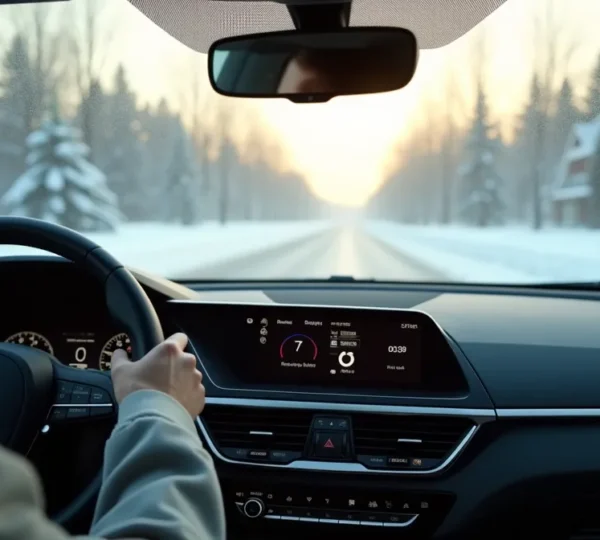
How to Customize Your Digital Cockpit to Reduce Distraction?
In summary: Treat your car’s screen not as a gadget, but as a critical safety system that requires proactive setup. Prioritize physical controls (knobs, buttons) over touchscreen interactions for essential functions to minimize time with your eyes off the road….
Lire la suite
How to Navigate Quebec’s Dead Zones When Your Phone Has No Signal?
The key to safe travel in Quebec’s remote regions isn’t hoping for better cell service, but making a complete shift to a satellite-based navigation strategy. Your phone’s mapping app is unreliable due to outdated road data, limited offline capabilities, and…
Lire la suite
How to Build a Quebec-Proof Smart Home and Car Ecosystem
True smart home and car integration in Quebec isn’t about convenience; it’s about building a resilient ecosystem to survive the winter. Extreme cold is the primary failure point, directly impacting your car’s battery and remote systems. Proactive management is key….
Lire la suite
Is the Subscription Model for Heated Seats Coming to Canada?
Your new car’s features might not be yours to keep; you could just be renting them, and the trend is already here in Canada. Automakers are shifting to « Features on Demand » to create predictable revenue, but this model can devalue…
Lire la suite
How Smart Traffic Lights in Montreal Are Changing Your Drive Time
Contrary to popular belief, Montreal’s smart traffic lights aren’t just about going faster; they are part of a complex ‘Urban Operating System’ making constant, invisible compromises between speed, safety, and city logistics. The system intentionally desynchronizes lights to prioritize critical…
Lire la suite
Should You Buy a Gas Car Before Canada’s 2035 Ban? A Quebec Driver’s Guide
The anxiety around Canada’s 2035 ban on new gas cars is misplaced; the real challenge for Quebec drivers is not the ban itself, but mastering the specific maintenance and financial strategies to turn your current vehicle into a cost-effective asset…
Lire la suite