Blog
Choosing the right vehicle in Quebec involves far more than simply picking a model that looks appealing on the showroom floor. The province’s unique climate, urban density patterns, vast rural expanses, and growing environmental consciousness create a complex decision matrix that impacts daily comfort, safety, and long-term costs. Whether you’re navigating Montreal’s narrow streets during winter or planning weekend escapes to the Laurentians, understanding how vehicle design intersects with real-world use transforms what seems like an overwhelming choice into a confident decision.
This resource connects the dots between vehicle body configurations, practical space management, safety considerations, and environmental responsibility. You’ll discover why certain design choices matter more in Quebec than elsewhere, how to evaluate carbon impact beyond the tailpipe, and what to consider when transitioning toward lower-emission mobility. Think of this as your foundation—a starting point that helps you ask the right questions before diving deeper into specific decisions.
Choosing the Right Vehicle Body for Your Quebec Lifestyle
Vehicle body configuration isn’t just about aesthetics—it’s a functional decision that affects everything from winter handling to parking convenience. Quebec drivers face specific challenges that make body type selection particularly consequential.
Why Body Shape Matters in Quebec’s Climate
The province’s harsh winters and significant seasonal temperature swings create unique demands. Hatchbacks have historically dominated Quebec roads not by accident, but through practical evolution. Their compact footprint excels in tight urban parking scenarios—think of trying to parallel park on Rue Saint-Denis after a snowplow has narrowed the available space by a meter on each side. The shorter overhangs also mean less likelihood of scraping on snow banks or steep driveways.
Beyond winter practicality, hatchbacks offer remarkable versatility. The rear liftgate opens to reveal a cargo area that can swallow weekly groceries, hockey equipment, or camping gear without requiring the length of a traditional trunk. This configuration matters when your typical Quebec year includes ski trips, cottage visits, and hauling winter tires twice annually.
Station Wagons Versus SUVs for Distance Driving
For those regularly covering the distances between Quebec City and Montreal, or heading to Gaspésie for summer vacations, the station wagon versus SUV debate becomes relevant. Station wagons offer SUV-level cargo capacity with a lower center of gravity, translating to better fuel economy on highway stretches and more predictable handling in crosswinds on exposed routes like Highway 20 along the St. Lawrence.
SUVs provide higher seating positions and genuine off-road capability for cottage access roads, but consider whether you actually need that capability or simply prefer the commanding view. The elevated driving position comes with trade-offs we’ll explore in the safety section.
Adapting to Urban Parking Realities
Montreal, Quebec City, and Gatineau present parking challenges that directly influence ideal vehicle dimensions. Underground parking structures built decades ago weren’t designed for today’s oversized SUVs. A vehicle that extends beyond 4.5 meters in length can turn a tight parking garage into a stressful obstacle course. Compact and subcompact configurations aren’t compromises—they’re strategic choices that reduce daily friction and protect your vehicle from the inevitable scrapes of tight urban maneuvering.
Maximizing Space While Maintaining Safety
Efficient space utilization and safety aren’t opposing goals—they’re interconnected elements of smart vehicle design that too many buyers overlook until they encounter real-world limitations.
Cargo Optimization in Compact Vehicles
Modern compact vehicles achieve remarkable cargo capacity through intelligent interior design. Folding rear seats that create flat load floors, underfloor storage compartments, and modular organizing systems can make a compact hatchback surprisingly capable. Consider this practical example: many compact crossovers offer between 700 and 1,000 liters of cargo space with seats up—adequate for most weekly needs—and over 1,500 liters with seats folded, rivaling vehicles a full size category larger.
The key is understanding your actual cargo patterns rather than worst-case scenarios. If you need maximum capacity only a few times yearly, renting for those occasions may be more economical than daily fuel penalties from a larger vehicle.
The Hidden Safety Risks of High Centers of Gravity
Here’s a reality that automotive marketing glosses over: higher centers of gravity increase rollover risk. Physics doesn’t care about brand reputation—a vehicle with its mass concentrated higher off the ground is inherently less stable during emergency maneuvers. Transport Canada data consistently shows SUVs experiencing higher rollover rates in single-vehicle accidents compared to sedans and wagons of similar weight.
This doesn’t mean SUVs are inherently dangerous, but it does mean that buyers should honestly assess whether the perceived safety benefits of size and height outweigh the measurable handling compromises. For most Quebec driving conditions—highway commutes and urban navigation—a lower center of gravity provides superior accident avoidance capability, which is always preferable to accident survivability.
Understanding Your Vehicle’s True Environmental Impact
Environmental consciousness is rising across Quebec, but truly reducing your transportation footprint requires looking beyond superficial metrics to understand the complete lifecycle impact of vehicle ownership.
The Manufacturing Carbon Debt
Every vehicle begins its life with a substantial carbon debt from manufacturing. Producing a typical midsize vehicle generates approximately 6 to 8 tonnes of CO2 equivalent—before it ever turns a wheel. Larger vehicles with aluminum-intensive construction or large battery packs can exceed 10 tonnes. This upfront impact means that keeping your current efficient vehicle longer often beats replacing it with something marginally more efficient, counterintuitive as that seems.
Battery production for electric vehicles adds to this initial burden, which is why the environmental case for EVs strengthens over time as operational emissions savings accumulate. In Quebec, where Hydro-Québec provides some of the continent’s cleanest electricity, that payback period is notably shorter than in coal-dependent jurisdictions.
Calculating and Reducing Your Driving Footprint
Operational emissions depend on three factors: fuel efficiency, distance driven, and fuel carbon intensity. Quebec drivers can influence all three. Natural Resources Canada’s fuel consumption ratings provide standardized comparisons, but real-world results vary based on driving patterns. Highway-heavy driving typically beats rated efficiency; short urban trips in winter fall below it.
Practical reduction strategies include:
- Trip consolidation: Combining errands reduces cold starts, which consume disproportionate fuel
- Pressure maintenance: Underinflated tires can increase consumption by 3-5% while reducing safety
- Speed moderation: Highway efficiency peaks around 90 km/h; every 10 km/h above increases consumption by roughly 10%
- Seasonal tire rotation: Using appropriate tires reduces rolling resistance and improves safety simultaneously
Local Offset Opportunities
Quebec-based carbon offset programs allow drivers to compensate for unavoidable emissions by funding verified reduction projects. Organizations like Planetair and Carbone boréal offer offsets tied to regional reforestation and renewable energy initiatives. While offsets don’t eliminate the preference for reducing emissions at the source, they provide a legitimate tool for addressing necessary travel impacts. Typical costs run between $20 and $30 annually to offset an average Quebec vehicle’s emissions—a modest investment for meaningful climate contribution.
Transitioning to Lower-Carbon Mobility Solutions
The shift toward electrified powertrains represents the most significant change in automotive technology in a century, but navigating the options requires understanding how different systems perform in Quebec’s specific context.
Hybrid Versus Plug-In Hybrid for Real-World Reduction
Standard hybrids combine conventional engines with battery assistance, improving efficiency by 20-35% compared to conventional equivalents without requiring charging infrastructure. They excel for drivers without reliable home charging access or those covering unpredictable daily distances.
Plug-in hybrids (PHEVs) offer electric-only range typically between 30 and 80 kilometers—enough to cover most Quebec daily commutes on electricity alone—while retaining gasoline range for longer trips. They deliver maximum carbon reduction when drivers commit to regular charging. However, a PHEV driven primarily on gasoline often proves less efficient than a standard hybrid due to the weight penalty of carrying both full powertrains.
The decision hinges on honest assessment of your charging discipline and driving patterns. Someone with a 25-kilometer round-trip commute and home charging will maximize PHEV benefits; someone covering 100+ daily kilometers with limited charging access won’t.
Recognizing Greenwashing in Automotive Marketing
As environmental concerns influence buying decisions, marketing departments have responded with claims that don’t always withstand scrutiny. Watch for these red flags:
- Vague sustainability claims: Phrases like « eco-friendly » without specific metrics or third-party verification
- Selective comparisons: Highlighting one improved aspect while ignoring overall footprint increases
- Offsetting as solution: Manufacturers claiming carbon neutrality through offsets while continuing to prioritize inefficient vehicle categories
- Future commitments: Promises about electrification timelines that conveniently lie beyond current purchase decisions
Legitimate environmental claims reference specific, verifiable metrics: fuel consumption in L/100km, emissions in g/km, battery capacity in kWh, and electric range in kilometers under standardized testing conditions.
Planning Your Personal Transition Timeline
Moving toward lower-carbon mobility rarely happens overnight—nor should it. A thoughtful transition considers your current vehicle’s condition, financial situation, charging access, and actual needs. If your current vehicle remains reliable and efficient, driving it until its natural end-of-life typically makes more environmental sense than premature replacement.
When replacement becomes necessary, assess your infrastructure reality. Do you have dedicated parking with electrical access? Can you install a Level 2 charger? What percentage of your annual driving occurs within typical EV range? Quebec’s extensive charging network continues expanding, but rural and remote areas still present challenges for full battery-electric adoption.
For many Quebec drivers, the optimal path involves moving from conventional to hybrid or PHEV now, while monitoring EV infrastructure development and battery technology advancement for a future full-electric transition. There’s no universal timeline—the right approach aligns technology capability with your specific circumstances while progressively reducing carbon impact.
Making informed vehicle decisions in Quebec means balancing practical needs against environmental responsibility within real-world constraints. The topics introduced here—from body configuration choices to carbon footprint reduction and powertrain transitions—provide the framework for evaluating specific situations. As you explore deeper into areas relevant to your circumstances, you’ll build the confidence to make choices that serve both your daily needs and broader sustainability goals.
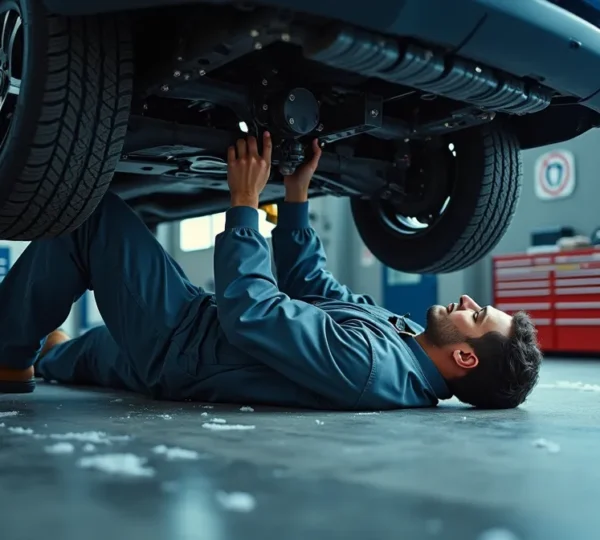
How to Find a Trustworthy Mechanic in Quebec Who Won’t Rip You Off?
Contrary to popular belief, avoiding bad mechanics in Quebec isn’t about finding the cheapest price—it’s about understanding the specific economic and regulatory system they work in. Mechanic rates and diagnostic fees are shaped by Quebec’s consumer protection laws and the…
Lire la suite
Is Keeping Your Old ‘Beater’ Greener Than Buying a New EV?
The greenest car isn’t one you buy; it’s one you understand. A new Electric Vehicle (EV) isn’t automatically cleaner than your old car due to its significant manufacturing « carbon debt. » The production of a new EV can generate more upfront…
Lire la suite
Hatchback or Coupe: Which Design Survives the Urban Jungle Better?
The right car for Quebec isn’t about brand or power; it’s about matching vehicle geometry to the province’s unique landscape of tight city streets and harsh winters. A hatchback’s vertical cargo opening and compact footprint offer superior spatial efficiency for…
Lire la suite