Safety & Driving
Driving in Quebec presents a unique combination of challenges that demand far more than basic vehicle operation skills. The province’s harsh seasonal extremes, aging road infrastructure, and increasingly complex vehicle technologies create a driving environment where understanding the relationship between conditions, equipment, and technique becomes essential for safety. Every Quebec driver faces deteriorating pavement riddled with potholes, winter storms that transform familiar routes into hazardous corridors, and modern vehicles equipped with systems that can both enhance and complicate the driving experience.
This comprehensive resource explores the interconnected elements of safe driving specific to Quebec’s reality. From protecting your vehicle against corrosive road treatments to mastering electronic stability systems during ice events, from understanding the limitations of driver assistance technology in adverse weather to developing the defensive mindset required for sharing roads with wildlife and heavy transport—each element contributes to a holistic approach to automotive safety. Whether you’re navigating Montreal’s construction-plagued urban corridors or traversing northern regional highways, the principles outlined here provide the foundation for confident, informed driving decisions.
Quebec’s Infrastructure Reality and Vehicle Protection
Quebec’s road network faces constant assault from a climate that cycles between extreme freeze and rapid thaw, creating conditions that accelerate pavement degradation far beyond what drivers in milder regions experience. The province’s liberal application of road salt and abrasive chemicals during the extended winter season—often spanning November through April—creates a corrosive environment that attacks vehicle undercarriages with relentless efficiency.
The chemical interaction between salt, moisture, and metal doesn’t simply create surface rust; it compromises structural integrity over time. Chassis components, suspension joints, and brake lines face continuous exposure to sodium chloride solutions that penetrate protective coatings and accelerate oxidation. This reality makes regular undercarriage washing during winter months not merely cosmetic maintenance but a genuine structural preservation strategy. Many Quebec drivers schedule professional undercoating applications before winter, creating sacrificial barriers that absorb the chemical assault rather than allowing it to reach critical components.
Beyond chemical degradation, Quebec’s notorious potholes present immediate mechanical threats. The spring thaw cycle creates the perfect conditions for pavement failure: water infiltrates small cracks during the day, freezes overnight causing expansion, and eventually breaks apart the road surface under traffic loads. Hitting even a moderate pothole at highway speeds can instantly knock wheel alignment out of specification, damage tire sidewalls, or bend suspension components. What many drivers dismiss as minor alignment issues—a slight pull to one side, uneven tire wear patterns—often indicate damage that compromises both handling precision and long-term mechanical health. The appropriate response involves immediate professional inspection rather than hoping the problem resolves itself.
Tire selection becomes particularly strategic in this environment. While marketing emphasizes tread patterns and rubber compounds for winter traction, the tire profile—specifically sidewall height—plays an equally important role in protecting wheels and suspension from pothole impacts. Lower-profile tires with minimal sidewall flex may deliver sporty handling on smooth pavement, but they transfer impact forces directly to wheels and suspension on Quebec’s deteriorating urban roads. Many experienced Quebec drivers deliberately choose tire sizes with taller sidewalls during winter months, accepting slightly compromised handling response in exchange for meaningful impact protection.
Winter Driving’s Multifaceted Challenges
Quebec winters demand comprehensive preparation that extends well beyond installing proper tires. The province’s mandatory winter tire regulation reflects recognition that rubber compound and tread design fundamentally determine traction capability below 7°C, but tire selection represents only one element of winter readiness.
Equipment Decisions and Maintenance
The studded versus non-studded tire debate continues among Quebec drivers, with each option presenting distinct trade-offs. Studded tires deliver superior grip on glare ice—the ultra-smooth, transparent ice that forms on pavement after freezing rain or when temperatures hover near freezing. The metal studs physically penetrate the ice surface, creating mechanical grip where rubber alone cannot. However, studs reduce traction on bare pavement, create noise, accelerate road wear, and face regulatory restrictions in some urban areas. Non-studded winter tires with advanced silica-enhanced compounds and aggressive tread designs now approach studded performance in most conditions while avoiding these drawbacks, making them the practical choice for drivers primarily navigating maintained urban routes.
Purchasing used winter tires presents risks that many budget-conscious drivers underestimate. Winter tire rubber compounds harden with age and UV exposure, losing the pliability that enables cold-weather traction. A used tire with apparently adequate tread depth may have aged beyond useful service life, offering false security. Additionally, previous damage—impacts that created internal structural failures without obvious external evidence—can lead to sudden failure. The modest savings rarely justify the compromised safety margin.
Wiper blades represent another frequently neglected component with outsized safety implications. Quebec’s winter precipitation arrives in forms ranging from dry powder to wet heavy snow to freezing rain, each demanding effective windshield clearing. Deteriorated wipers with hardened rubber edges create streaking that scatters oncoming headlight glare, severely compromising night visibility. Replacing wipers before winter—typically an investment under $50—prevents situations where you’re navigating a snowstorm while peering through smeared glass.
Cabin Environment and Visibility
Maintaining clear visibility during extreme seasonal transitions requires understanding systems beyond windshield wipers. Quebec’s dramatic temperature and humidity swings—particularly during spring and fall—create persistent interior fogging that obscures vision. Many drivers don’t realize that air conditioning serves a dehumidification function even in winter. Running the AC system while heating directs air across the evaporator coil, which condenses moisture from the cabin atmosphere, then reheats that dried air before delivering it to the windshield. This technique clears fog far more effectively than heat alone, which simply moves humid air around without removing moisture.
Strategic Travel Planning
Winter storm warnings from Environment Canada require respectful response rather than challenging. Quebec’s winter storms can reduce visibility to near-zero within minutes while creating whiteout conditions where spatial reference disappears entirely. The strategic approach involves monitoring forecasts, postponing non-essential travel during warning periods, and maintaining emergency supplies—blankets, non-perishable food, water, flashlight, phone charger—for situations where you become stranded. Northern regional roads present the additional complication of wildlife encounters, particularly moose and deer, which become more active during dawn and dusk hours. A moose collision at highway speeds often proves catastrophic; the animal’s high center of mass means impact sends its body directly through the windshield rather than over the vehicle.
Understanding Modern Vehicle Technology
Contemporary vehicles arrive equipped with sophisticated driver assistance systems that promise enhanced safety but require informed understanding to use effectively. Quebec’s challenging conditions—heavy precipitation, sensor-obscuring road spray, snow-covered lane markings—frequently exceed the operational parameters these systems were designed to handle.
Driver Assistance System Limitations
Adaptive cruise control (ACC), lane keeping assist (LKA), and automatic emergency braking rely on cameras, radar, and ultrasonic sensors to perceive the environment. Winter conditions compromise these sensors through multiple mechanisms: snow and ice accumulation physically blocks sensor apertures, road spray creates optical interference, and heavy snowfall creates radar reflections that systems interpret as phantom obstacles. Many drivers experience situations where their ACC suddenly disengages during snowfall, or LKA ceases functioning because cameras cannot detect lane markings buried under snow.
The appropriate response involves understanding when to disengage these systems rather than fighting their unpredictable behavior. Standard cruise control—which maintains speed without monitoring traffic—often proves more reliable than ACC during heavy precipitation. Similarly, temporarily disabling LKA when lane markings become invisible prevents the unsettling sensation of the system making random steering corrections based on shadows or pavement seams it misinterprets as lane boundaries.
Construction zones, which proliferate across Quebec’s highways during summer months, create another scenario where driver assistance systems struggle. Temporary lane markings, shifted traffic patterns, and concrete barriers all confuse sensors designed for consistent highway geometry. The critical lesson: driver assistance systems assist but never replace active human attention and decision-making.
Interface Design and Distraction
The automotive industry’s migration from physical buttons to touchscreen interfaces creates documented safety concerns. Physical controls allow drivers to operate functions—adjusting climate, changing audio sources, activating heated seats—through tactile feedback without visual confirmation. You learn button locations and can make adjustments while maintaining eyes on road. Touchscreen systems demand visual attention to navigate menus and confirm selections, creating « eyes-off-road time » that measurably increases crash risk. Quebec drivers navigating complex urban traffic or challenging highway conditions should consciously minimize touchscreen interaction while moving, making necessary adjustments during stopped periods.
Mastering Stability and Control Systems
Electronic stability control (ESC) represents the single most significant vehicle safety advancement of recent decades, preventing countless loss-of-control crashes. However, understanding the physical dynamics ESC manages—understeer and oversteer—enables drivers to recognize developing instability and respond appropriately rather than relying entirely on electronic intervention.
Understeer occurs when front tires lose grip before rears, causing the vehicle to continue straight despite steering input—like pushing a shopping cart too fast around a corner. Oversteer happens when rear tires lose grip first, allowing the rear to swing outward. ESC detects these conditions through sensors monitoring wheel speeds, steering angle, and lateral acceleration, then selectively applies individual wheel brakes to generate correcting forces that realign the vehicle with the driver’s intended path.
The ESC warning light—typically a vehicle icon with skid marks—illuminates when the system actively intervenes. Seeing this light flash during normal driving indicates you’re operating at or beyond available traction limits and should reduce speed. Persistent illumination suggests system malfunction requiring immediate service attention.
Deep snow presents unique dynamics where ESC intervention sometimes proves counterproductive. When extracting a vehicle from deep snow, momentum and wheel spin help drive through resistance, but ESC interprets this as loss of control and cuts power. Many vehicles provide ESC deactivation modes specifically for this scenario, though the system typically reactivates automatically above certain speeds to prevent drivers from forgetting to re-enable protection.
Developing Defensive Awareness and Prediction
Technical knowledge and proper equipment provide necessary but insufficient foundations for safety. The most critical element involves cultivating a proactive, predictive mindset that continuously assesses developing situations and positions your vehicle to maximize safety margins.
Eye lead time—the practice of looking well ahead rather than fixating on the space immediately in front of your vehicle—allows early recognition of potential hazards while providing time for smooth, controlled responses rather than emergency reactions. On highways, this means scanning 12-15 seconds ahead (roughly a quarter-mile at 100 km/h), noting brake lights, merging traffic, or changing conditions well before they become immediate threats.
Following distance creates your safety buffer. The traditional « two-second rule » provides absolute minimum spacing in ideal conditions; Quebec winters demand four to six seconds to account for extended stopping distances on compromised surfaces. This spacing allows gradual speed adjustments rather than hard braking, reduces rear-end collision risk if you encounter unexpected obstacles, and provides maneuvering room if vehicles around you lose control.
Sharing roads with heavy transport requires particular awareness. Large trucks’ significant mass creates extended stopping distances, wide turning radii, and substantial blind spots along both sides and directly behind. Positioning your vehicle where truck drivers can see you in mirrors—avoiding lingering alongside trailers—and providing extra space for their turning movements prevents accidents that often prove catastrophic for passenger vehicle occupants.
Quebec’s cycling infrastructure continues expanding, bringing cars and bicycles into closer proximity. Provincial regulations mandate leaving 1.0 meter clearance when passing cyclists on roads with speed limits up to 50 km/h, and 1.5 meters on faster roads. This spacing protects cyclists from side-mirror strikes and provides buffer space if they swerve to avoid obstacles. Patient passing—waiting for oncoming traffic to clear before moving into the adjacent lane to pass with proper clearance—shows respect for vulnerable road users while meeting legal obligations.
The Physics of Stopping: Reaction and Braking
Understanding stopping distance’s two distinct components—reaction distance and braking distance—reveals why speed management proves so critical for safety. Reaction distance covers the ground you travel between perceiving a threat and beginning to brake, typically 1.5 seconds for alert drivers. At 50 km/h, this represents roughly 21 meters; at 100 km/h, approximately 42 meters. This distance occurs before your brakes even engage.
Braking distance depends on speed, tire condition, road surface, and brake system capability. It increases exponentially with speed: doubling your speed quadruples braking distance. Wet pavement extends braking distance by 50-100% compared to dry conditions. Ice can increase it by 10 times or more. This explains why moderate speeds in winter conditions aren’t overcautious—they’re mathematical necessity.
Quebec autumns introduce a specific but serious hazard: wet leaves covering pavement create surprisingly slippery conditions approaching ice. Leaves contain natural oils that, when wet and compressed, form a low-friction layer between tires and pavement. Shaded areas where leaves accumulate and remain wet throughout the day become particularly treacherous during October and November.
Brake fade—reduced braking effectiveness from overheating—affects drivers descending Quebec’s mountainous regions, particularly in the Laurentians, Charlevoix, and Eastern Townships. Extended brake application generates heat that brake systems must dissipate. Exceeding heat dissipation capacity causes brake fluid to boil or friction material to overheat, dramatically reducing stopping power. The solution involves engine braking—downshifting to lower gears and allowing engine compression to control speed—which requires no brake application and generates no brake heat.
These interconnected elements—from infrastructure realities to vehicle technology, from stability systems to defensive awareness, from winter equipment to braking physics—form the comprehensive knowledge base that Quebec driving demands. Mastering these concepts transforms driving from simple vehicle operation into informed risk management, where understanding enables confident decisions that protect you, your passengers, and everyone sharing the road.

Black Ice vs. Dry Asphalt: How Much Longer Does It Really Take to Stop?
The difference in stopping distance between dry asphalt and black ice isn’t just a few meters; it’s a catastrophic loss of control dictated by physics, where your stopping distance can increase tenfold. Your vehicle’s kinetic energy increases with the square…
Lire la suite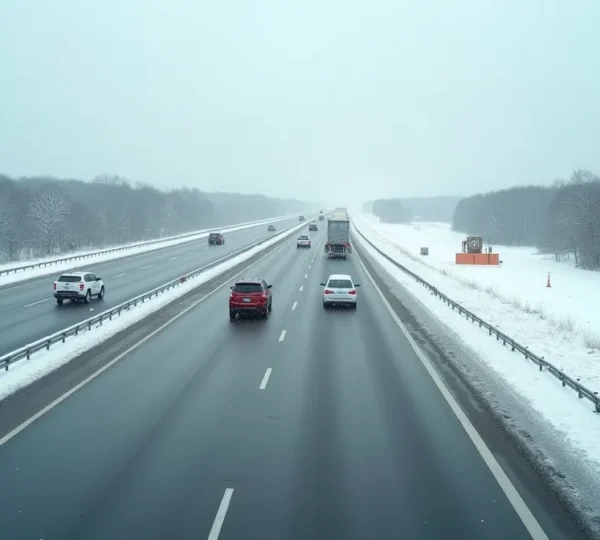
How to Predict Other Drivers’ Mistakes and Avoid Accidents in Quebec?
The key to avoiding accidents isn’t just following traffic laws; it’s developing a predictive mindset that anticipates errors before they happen. Most collisions are preventable by reading the « road story »—observing cues that signal another driver’s next move. Managing your « traction…
Lire la suite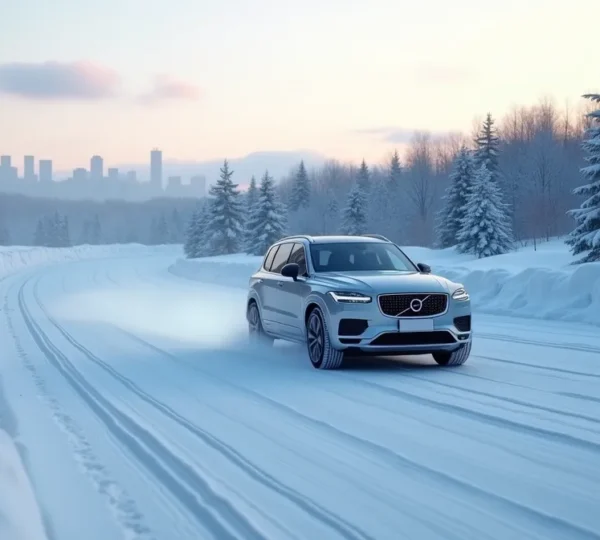
How to Use Electronic Stability Control to Correct a Drift on Ice?
To correct a slide on ice, you must actively collaborate with your car’s Electronic Stability Control (ESC), not just passively trust it. ESC works by braking individual wheels to counteract a skid, but its effectiveness is entirely dependent on the…
Lire la suite
Why Does Lane Keeping Assist Fail on Quebec’s Faded Roads?
Your car’s Lane Keeping Assist isn’t broken; it was simply not designed for the harsh reality of Quebec roads. The system’s « brain, » trained on perfect Californian roads, gets confused by faded lines, salt residue, and conflicting construction markings common in…
Lire la suite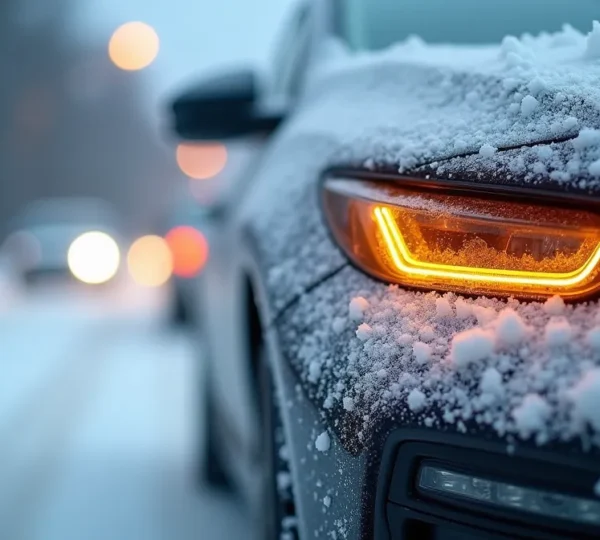
Why Does Your Adaptive Cruise Control Fail During a Snowstorm?
Contrary to popular belief, your Adaptive Cruise Control (ACC) failing in a Quebec snowstorm isn’t a technical flaw; it’s a critical safety communication telling you that you have reached the system’s operational limit. Sensor blockage from snow or slush is…
Lire la suite
Why Your Windows Fog Up in Quebec Weather, and the Real Way to Stop It
Instantly clearing a fogged windshield isn’t a magic button sequence; it’s about actively managing your car’s entire moisture ecosystem, a system constantly under attack by Quebec’s extreme climate. Your car’s A/C is your most powerful dehumidifier, and it must be…
Lire la suite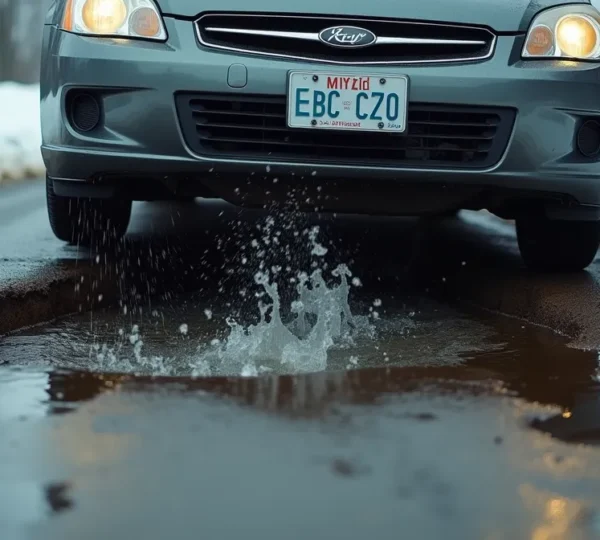
How to Protect Your Suspension From Quebec’s Pothole Season Costs?
The jarring impacts from potholes are just the visible symptom; the real damage to your vehicle is a silent « degradation cascade » caused by Quebec’s unique road conditions. Road salt initiates a corrosive attack that weakens your car’s structure long before…
Lire la suite