
The anxiety around Canada’s 2035 ban on new gas cars is misplaced; the real challenge for Quebec drivers is not the ban itself, but mastering the specific maintenance and financial strategies to turn your current vehicle into a cost-effective asset for the next decade.
- Your car’s longevity is directly tied to managing “thermal stress,” a critical factor in Quebec’s climate that demands specific choices in fuel and oil.
- Proactive maintenance on modern engine vulnerabilities, like Direct Injection systems, is no longer optional—it’s a core financial strategy to avoid costly repairs and preserve value.
Recommendation: Instead of panicking about the 2035 deadline, focus on implementing an “ICE Bridge Strategy”—a deliberate plan of climate-specific care that maximizes your current car’s lifespan and value, giving you the freedom to transition to an EV when it’s affordable and practical for you.
The 2035 deadline for the end of new gas-powered vehicle sales in Canada feels like a rapidly approaching finish line for many Quebec drivers. Headlines spark anxiety: will my car become worthless? Will I be forced into an expensive electric vehicle (EV) before I’m ready? The common advice is often simplistic—either a dismissive “you can still drive your used car” or an unrealistic “just switch to an EV now.” Both perspectives miss the crucial reality for a traditional driver in Quebec, who faces brutal winters, long distances, and very real budget constraints. The concerns about charging infrastructure, battery performance at -30°C, and affordability are not just talking points; they are practical, everyday barriers.
But what if the conversation is framed incorrectly? The key to navigating this transition isn’t to fear the 2035 date, but to understand that the ban is a catalyst. It accelerates existing mechanical and financial pressures that have always impacted vehicles, especially in a demanding climate like Quebec’s. The real strategy isn’t about fighting the future, but about mastering the present. It involves a shift in mindset from simple ownership to strategic asset management. Your current internal combustion engine (ICE) vehicle is not an expiring commodity; it’s your bridge to an affordable electric future.
This guide offers a different perspective. We will move beyond the headlines to delve into the specific, practical, and often overlooked mechanics of extending the life and value of your gas car. We’ll explore why certain fuels and oils are critical in our winters, how to preemptively tackle costly modern engine problems, and how to realistically assess your vehicle’s future financial value. By understanding these factors, you can build a robust “ICE Bridge Strategy” that empowers you to control your automotive future, ensuring your car serves you reliably and cost-effectively until you decide it’s the right time to cross over to electric.
In this article, we will dissect the essential strategies every Quebec driver needs to master. From the science of winter gasoline to the economic realities of depreciation, you’ll find the information needed to create a clear, actionable plan for the years ahead.
Summary: A Quebec Driver’s Strategic Guide to the 2035 Transition
- Why Does Cheap Gas Trigger Your Check Engine Light in Winter?
- How to Make Your Gas Engine Last Until Electric Cars Become Affordable?
- Turbo vs Non-Turbo: Which Engine Warms Up Faster in -30°C?
- The Direct Injection Issue That Costs $800 to Clean Every 80,000 km
- When Will Gas Car Values Crash in Quebec: 2028 or 2032?
- Why Does Synthetic Oil Flow Better at -30°C Than Conventional Oil?
- Will Your Gas Car Be Worthless in 2030 Due to New Mandates?
- What Does the 2035 Gas Car Ban Mean for Current Owners?
Why Does Cheap Gas Trigger Your Check Engine Light in Winter?
As temperatures plummet in Quebec, many drivers are tempted by discount gasoline, only to be met with a sputtering engine or a dreaded “Check Engine” light. This isn’t a coincidence; it’s a matter of chemistry. Gasoline is not a one-size-fits-all product. Refiners produce different blends for summer and winter to account for ambient temperatures. The key difference lies in the fuel’s Reid Vapor Pressure (RVP), which measures its volatility. For an engine to start in the cold, gasoline must vaporize easily. Winter blends are formulated with more volatile compounds, like butane, to achieve this.
In fact, winter gasoline can have an RVP as high as 15.0 psi, compared to summer blends which are typically capped around 9.0 psi to reduce smog-forming evaporative emissions in warmer weather. When a discount station is slow to switch its tanks over, or if you’re running on the dregs of a tank filled in the fall, you’re trying to start your car with a less volatile fuel. Your car’s computer (ECU) expects a certain air-fuel mixture, and when the fuel doesn’t vaporize properly, it can lead to a lean condition, misfires, and hesitation, triggering the check engine light.
The trade-off for this necessary winter volatility is slightly lower energy content. Butane has less energy than other components of gasoline, resulting in a small but noticeable drop in fuel economy. However, this is a far better alternative than being stranded on a frigid morning. Choosing a Top Tier certified gasoline is particularly crucial in winter, as these fuels contain enhanced detergent packages that help keep fuel injectors clean and prevent the very issues exacerbated by cold, incomplete combustion.
This table illustrates the fundamental differences between the fuel blends and their impact on your vehicle’s performance in Quebec’s distinct seasons.
| Property | Winter Blend | Summer Blend | Impact on Engine |
|---|---|---|---|
| Reid Vapor Pressure | 11.5-15 psi | 7.0-9.0 psi | Higher RVP aids cold starts |
| Butane Content | ~10% higher | Lower | Improves volatility but reduces energy |
| Fuel Economy | 2-3% lower | Baseline | 20% less energy in butane |
| Evaporation Rate | Higher | Lower | Better cold weather vaporization |
How to Make Your Gas Engine Last Until Electric Cars Become Affordable?
The core of the “ICE Bridge Strategy” is transforming your mindset from short-term fixes to a philosophy of strategic longevity. It’s not about frantically keeping an old car alive; it’s about making a deliberate investment in your current vehicle to maximize its useful life and defer a major new purchase. This is especially true in Quebec, where the combination of extreme cold, road salt, and stop-and-go city traffic puts immense “thermal stress” on every component. A proactive approach is the only way to ensure your engine doesn’t just survive, but thrives for the next decade.
This strategy begins with a non-negotiable commitment to a superior maintenance schedule that goes beyond the manufacturer’s minimum recommendations. This means shorter oil change intervals, especially if you do a lot of short trips, and using only high-quality synthetic oils and filters. It also means paying close attention to the cooling system, which works overtime to manage engine temperatures during both sweltering summer traffic jams and frigid cold starts. A cooling system failure is one of the fastest ways to destroy an engine, yet it’s often neglected until it’s too late.
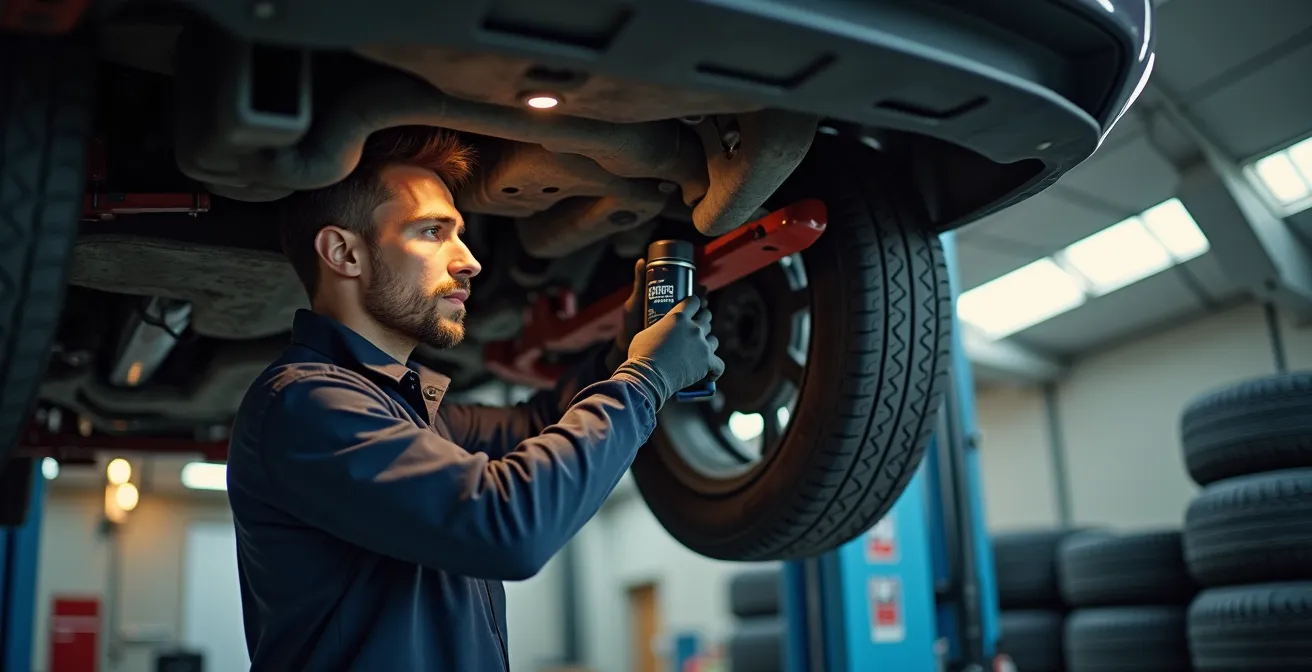
Furthermore, annual rust protection is not a luxury in Quebec; it’s a fundamental part of preserving the structural integrity and resale value of your vehicle. A severely corroded frame or underbody can render a mechanically sound car worthless. By investing in preventative care, you are not just spending money on maintenance. You are actively building a more reliable and valuable asset, giving yourself the financial flexibility and peace of mind to wait for the EV market to mature, for prices to come down, and for the charging infrastructure to fully meet your needs.
Turbo vs Non-Turbo: Which Engine Warms Up Faster in -30°C?
In the depths of a Quebec winter, the time it takes for your car’s cabin to produce heat is a matter of comfort and safety. Intuitively, one might assume a smaller, modern turbocharged engine would warm up faster. While it’s true that smaller engines have less metal and fluid (thermal mass) to heat, the reality at -30°C is more complex. A non-turbo, larger displacement engine often has an edge in producing cabin heat more quickly. The reason is that it generates more waste heat at idle and low-load conditions simply due to its size and less efficient design. It’s burning more fuel just to stay running, and that excess energy becomes heat.
Conversely, a small turbocharged engine is incredibly efficient. It’s designed to produce power on demand, but at a cold idle, it sips fuel and generates very little waste heat. The turbocharger system itself adds complexity. It has its own set of oil and, in many cases, coolant lines that also need to warm up. The turbocharger, a dense chunk of metal, acts as an additional heat sink, absorbing thermal energy that would otherwise go to the engine block and the heater core. This is why you may notice your modern turbo car takes a frustratingly long time to blow warm air if you just let it idle.
This delayed warm-up in turbocharged engines poses a more significant risk: oil coking. Repeated short trips in extreme cold—like a quick drive to the dépanneur—can be devastating. The engine and oil never reach optimal operating temperature, but the turbo can still get hot. When the car is shut off, the oil sitting in the feed lines to the hot turbo can essentially cook, forming hard carbon deposits. As AMSOIL’s technical team vividly puts it, “At -30°C, conventional oil is like refrigerated molasses; synthetic is like olive oil.” This is why using a high-quality synthetic oil is non-negotiable for turbo engines in cold climates; its superior flow characteristics ensure it circulates and protects critical components faster, mitigating the risk of long-term damage from cold starts.
The Direct Injection Issue That Costs $800 to Clean Every 80,000 km
For the past decade, Gasoline Direct Injection (GDI) has become the standard for new engines, prized for its efficiency and power. However, this technology comes with a significant long-term maintenance catch, one that many owners only discover when faced with a hefty repair bill. Unlike traditional port injection engines that spray fuel onto the intake valves, naturally cleaning them, GDI systems inject fuel directly into the combustion chamber. This means the back of the intake valves are never washed by gasoline. Instead, they are exposed to oil vapor and combustion byproducts from the crankcase ventilation system, which bake onto the hot valve stems, forming thick carbon deposits.
p>
As these deposits build up, they disrupt the carefully engineered airflow into the cylinder. The result is a gradual and insidious loss of performance: rough idling, hesitation during acceleration, decreased fuel economy, and eventually, engine misfires. By the time you notice these symptoms, the buildup is often severe. The only effective solution is a manual cleaning process, typically a “walnut blasting” service, where a technician uses crushed walnut shells under high pressure to scour the carbon off the valves. This is a labor-intensive job that can easily cost $800 or more and is often required every 60,000 to 80,000 kilometers.
This is a perfect example of where component-specific triage is essential. Waiting for symptoms is a reactive and costly mistake. A proactive owner can significantly mitigate this issue. Using exclusively Top Tier gasoline helps, as their higher levels of detergents can reduce some deposit precursors, but it’s not a complete solution. The most effective strategies involve a combination of preventative measures that actively combat the formation of these deposits, preserving engine performance and avoiding that surprise bill.
Action Plan: Preventing Carbon Buildup in GDI Engines
- Use Top Tier gasoline exclusively to take advantage of superior detergent additives that minimize deposit-forming compounds in the fuel system.
- Perform an “Italian tune-up” at least once a month by driving at sustained highway speeds (e.g., on Autoroute 20 or 40) for 20-30 minutes to increase engine temperatures and help burn off soft deposits.
- Add a high-quality fuel system cleaner specifically designed for GDI engines to your gas tank every 5,000 km, particularly during the winter months when short trips are more common.
- For engines notoriously prone to carbon buildup, consider installing an oil catch can, which intercepts oil vapors from the crankcase ventilation system before they can reach the intake valves.
- Don’t wait for symptoms. Budget and schedule a professional walnut blasting service as preventative maintenance between 60,000 and 80,000 km to restore performance and efficiency.
When Will Gas Car Values Crash in Quebec: 2028 or 2032?
Predicting the exact moment of a market crash is impossible, but we can analyze the forces that will cause “depreciation curve acceleration” for gasoline vehicles in Quebec. The value of a used car is determined by supply and demand. The 2035 ban on new gas car sales is the final backstop, but several preceding milestones will progressively shift demand away from ICE vehicles. The first major pressure point is the federal mandate: a report states that by 2030, at least 60% of all new cars sold in Canada must be zero-emission vehicles (ZEVs). This isn’t a distant target; it’s a rapidly approaching reality that will dramatically increase the visibility and availability of EVs on the road.
However, for Quebecers, the provincial timeline is even more aggressive. Quebec has its own regulations that effectively ban the sale of most new gasoline vehicles from the 2035 model year onwards. This means the last new models will be sold in 2034. As these dates get closer, a psychological shift will occur. Buyers will become increasingly hesitant to purchase a new or late-model gas car, fearing it will be a rapidly depreciating asset. This sentiment will likely begin to crystalize and impact market values significantly around the 2028-2030 timeframe.

Why this window? By 2028, the 2030 60% mandate will be just two years away. EV technology, particularly battery range and cost, is expected to have made significant leaps. The charging network will be far more robust. At this point, the total cost of ownership for a new EV will likely be at or below that of a comparable gas car. This will trigger a slowdown in demand for high-value used ICE vehicles (3-5 years old), causing their depreciation curve to steepen. While older, cheaper gas cars will retain some value for budget-conscious buyers, the mid-to-high end of the market will feel the most pressure. The “crash,” if it can be called that, won’t be a single event, but a steady and accelerating decline in value beginning in the latter half of this decade.
Why Does Synthetic Oil Flow Better at -30°C Than Conventional Oil?
During a harsh Quebec cold snap, the single most important moment for your engine’s long-term health is the first minute after you turn the key. This is when the difference between conventional and synthetic oil becomes starkly, and critically, apparent. The ability of oil to flow when cold is measured by its “pour point”—the lowest temperature at which it will still pour. Conventional oil, refined from crude, contains irregularly shaped molecules and impurities (like wax) that cause it to thicken dramatically and begin to gel at low temperatures. Its pour point is often around -25°C to -30°C, right in the heart of a Canadian winter cold spell.
Synthetic oil, on the other hand, is engineered in a lab. Its molecules are uniform in size and shape, and it is free from the waxy impurities found in conventional oil. This molecular consistency allows it to resist thickening and flow freely at much lower temperatures, with pour points often reaching -45°C or even lower. This isn’t just a number on a spec sheet; it has a direct impact. When you start your car at -30°C, synthetic oil can circulate through the engine and reach critical components like bearings, camshafts, and turbochargers in seconds. Conventional oil, being thick as molasses, can take up to a minute or more to do the same, starving vital parts of lubrication during a period of high stress. In fact, studies show that synthetic oil enables easier cold weather starting and faster warm-up in the critical first 60 seconds.
This superior cold-flow performance is why using synthetic oil is a cornerstone of “Thermal Stress Management.” It directly reduces the wear and tear of cold starts, which is the primary source of engine aging for vehicles in our climate. The following table clearly demonstrates the significant advantages of synthetic oil in winter conditions.
| Property | Conventional Oil | Synthetic Oil | Winter Benefit |
|---|---|---|---|
| Pour Point | -25°C | -45°C | Flows at lower temperatures |
| Viscosity Index | 95-100 | 140-160 | Less thickening when cold |
| Cold Cranking | Difficult below -25°C | Reliable to -40°C | Easier winter starts |
| Drain Interval | 5,000 km | 10,000-15,000 km | Fewer winter oil changes |
Key Takeaways
- In Quebec’s climate, your choices of winter-blend fuel and synthetic oil are not optional upgrades; they are critical investments in your engine’s fundamental reliability and longevity.
- Proactive maintenance, especially for known vulnerabilities like GDI carbon buildup, should be viewed as a financial strategy to prevent costly future repairs and preserve your vehicle’s resale value.
- The depreciation of gas cars will be driven by specific provincial and federal ZEV sales mandates, creating predictable pressure points long before the 2035 ban on new sales.
Will Your Gas Car Be Worthless in 2030 Due to New Mandates?
The word “worthless” is dramatic, but it reflects a genuine fear among owners. The reality is more nuanced. Your 2015 Honda Civic will not suddenly have zero value on January 1st, 2030. However, its role and its market value will have fundamentally changed. The key is to separate the concept of “operational value” from “market value.” Your car will continue to have high operational value to you as long as it is reliable, safe, and fuel is available. The mandates do not prevent you from driving, repairing, or selling your used gasoline car.
The used car market will likely bifurcate. Newer, more expensive used ICE vehicles will face the steepest depreciation as buyers with larger budgets will increasingly opt for new or used EVs. However, the market for older, affordable, and reliable gas cars will persist. For many people, a $5,000 used car will remain the only financially viable option for personal transportation for years to come. As one used car dealership analysis points out, gas-powered vehicles will remain a staple on Canadian roads because their low upfront cost and proven longevity will continue to appeal to a large segment of the population.
Gas-powered vehicles will remain a staple on Canadian roads for years to come. While the sale of new gas-powered cars is being phased out, many Canadians will continue to choose to buy a used vehicle because of the lower cost and longevity associated with them.
– Howie’s Car Corral, Victoria Used Car Dealership Analysis
However, we must not be complacent. The experience of other countries provides a cautionary tale. Norway, for example, aimed to phase out new gas car sales by 2025 but is on track to hit nearly 100% EV sales years ahead of schedule. This shows that when market conditions, government incentives, and consumer sentiment align, the transition can happen much faster than regulations mandate. Therefore, while your car won’t be worthless, banking on a high resale value after 2030 is an unwise financial strategy. The most prudent approach is to plan for its value to be primarily in its utility to you, not in its future sale price.
What Does the 2035 Gas Car Ban Really Mean for Your Strategy?
With all the technical details and financial forecasts, it’s easy to lose sight of the big picture. The 2035 ban on new internal combustion engine vehicles is not an expiration date for your current car. It is a firm signal from policymakers that is designed to shape the market over the next decade. For you, the current owner, this translates into a clear mission: implement an “ICE Bridge Strategy.” This means viewing your current vehicle not as an outdated liability, but as a strategic asset to be managed intelligently, allowing you to bridge the gap to a time when EVs are cheaper, better, and more convenient for your specific needs in Quebec.
This strategy rests on the pillars we’ve discussed: aggressive, climate-specific preventative maintenance; the non-negotiable use of high-quality synthetic oils and Top Tier fuels; and a realistic, clear-eyed view of your car’s future financial value. It means shifting your budget from thinking about a new car payment to investing in the longevity of your current one. This is an active, not a passive, approach. You are in control. The government is steering the new car market, but you are the captain of your own vehicle’s destiny.
The transition is being supported by massive infrastructure investment, but it will take time to fully mature. Knowing this gives you the power of patience. By extending the reliable life of your gas car to 2030 or beyond, you give the market time to work in your favor. Battery technology will improve, prices will fall, and the charging network will become ubiquitous. You will be able to make your next vehicle purchase based on choice and value, not on regulatory pressure or the premature failure of your current car. The 2035 ban is not a door slamming shut; it is a long, well-lit runway, and you have the power to decide when your plane takes off.
Your next step is to move from understanding to action. Assess your vehicle’s current maintenance schedule, evaluate the products you’re using, and start building your own proactive ICE Bridge Strategy today. This thoughtful planning is your best defense against future uncertainty and your key to financial peace of mind.
Frequently Asked Questions About Winter Engine Performance
Why do turbo engines struggle more in extreme cold?
Turbo engines have additional oil feed lines that must warm up, and the turbocharger itself adds thermal mass that needs heating before optimal performance. This can slightly delay the engine reaching its most efficient operating temperature compared to a simpler, non-turbo engine.
Does a smaller displacement turbo engine warm up faster?
Yes, in theory, smaller engines have less thermal mass to heat, which can lead to a faster warm-up. However, the added complexity and thermal mass of the turbocharger system can sometimes offset this advantage, especially from a cold start in extreme temperatures.
What’s the risk of oil coking in turbo engines during winter?
Repeated cold starts followed by short trips are a major risk. The engine oil doesn’t reach a high enough temperature to burn off contaminants, but the turbocharger can still get very hot. When the engine is shut off, stagnant oil in the turbo’s feed lines can carbonize, or “coke,” leading to blockages, oil starvation, and potentially catastrophic turbo failure.