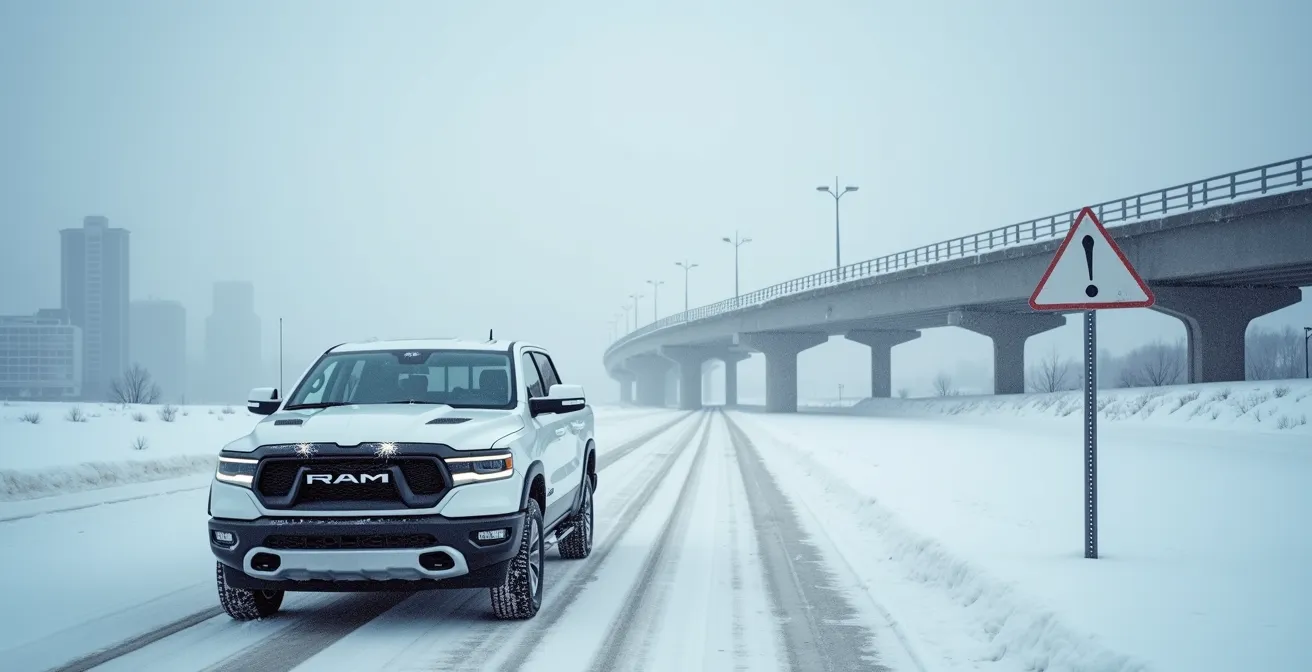
Despite the marketing, Advanced Driver-Assistance Systems (ADAS) are not a guaranteed ticket to lower insurance premiums in Quebec due to skyrocketing repair and calibration costs.
- A simple windshield replacement can cost over $1,000 because the camera system requires expensive recalibration.
- Minor fender benders can lead to mandatory, multi-hundred-dollar radar recalibrations to ensure the system works correctly.
Recommendation: Before buying a car for its safety features, understand this hidden “calibration penalty” and confirm your comprehensive insurance policy explicitly covers these specific recalibration costs.
As an insurance broker in Quebec, one question lands on my desk almost daily: “I bought a car with all the latest safety gadgets—lane assist, automatic braking—so my insurance will be cheaper, right?” It’s a logical assumption. These systems are designed to prevent accidents, and fewer accidents should mean lower premiums. For years, this has been the promise of Advanced Driver-Assistance Systems (ADAS). We’ve all seen the commercials showing a car stopping itself just inches from an obstacle, saving the day.
However, the on-the-ground reality, especially here in Quebec, is far more complex. The conversation I have with my clients isn’t about a straightforward discount. Instead, it’s about a new kind of financial equation where the high cost of repairing this sensitive technology often clashes with the potential premium savings. This isn’t to say ADAS is without value; it absolutely prevents accidents. But if you believe these features are a simple money-saving tool, you might be in for an expensive surprise when your first windshield chip or fender bender occurs.
The real issue isn’t whether the technology works, but rather what it costs when it inevitably interacts with the real world of potholes, road salt, and minor collisions. This is the safety paradox: features designed to save you from costly accidents can introduce new, surprisingly high maintenance and repair costs that insurers must factor into their pricing. This article will break down the hidden costs and operational quirks of these systems, so you can understand why your high-tech car might not be the insurance bargain you expected.
To give you a clear picture of the costs and complexities involved, this guide explores the common issues Quebec drivers face with their ADAS-equipped vehicles. We will examine everything from sensor malfunctions to the surprising expenses hidden in seemingly minor repairs.
Summary: Why ADAS Doesn’t Guarantee Lower Insurance Premiums
- Why Does Your Car Slam on the Brakes for No Reason?
- How to Avoid Paying $400 for Camera Calibration After a Glass Chip?
- Low-Speed vs High-Speed AEB: Which System Prevents Fender Benders?
- The Backup Camera Blind Spot: Hitting a Post Sensors Didn’t See
- How to Adjust Collision Sensitivity to Stop Annoying Beeps?
- Why Do Radar Sensors Need Recalibration After a Fender Bender?
- Why Your Dashboard Sensors Fail Faster in Winter Conditions?
- Why Does Replacing a Windshield Cost $1,000 on a Car With ADAS?
Why Does Your Car Slam on the Brakes for No Reason?
This unnerving experience, known as “phantom braking,” is one of the most jarring downsides of current ADAS technology. You’re driving on a clear road, and your car suddenly and violently brakes for no apparent reason. It might mistake a shadow, a metal bridge overhead, or even just glare for an imminent collision. While Automatic Emergency Braking (AEB) systems are credited with significantly reducing accidents, their flaws create new risks. In fact, these phantom braking events have become so common they’ve triggered major investigations, such as the one into nearly 3 million Honda vehicles where the AEB system could activate with no obstruction.
From an insurance perspective, this is a double-edged sword. Yes, the system might prevent a costly front-end collision one day. But a phantom braking event on a busy highway like the 40 can easily cause a rear-end collision, leading to claims, increased premiums, and potential injuries. The technology is caught between preventing one type of accident and potentially causing another. This is part of the cost neutralization insurers see; the benefits of the system are partially offset by the new risks it introduces. For a driver in Quebec, it means you’re not just relying on the car’s tech, but also on the driver behind you being alert enough to react to your car’s sudden, unpredictable stops.
How to Avoid Paying $400 for Camera Calibration After a Glass Chip?
Here is where the “safety paradox” hits your wallet directly. A small rock hits your windshield, creating a chip. In the past, this was a minor, inexpensive repair. On a modern car with ADAS, that same chip, if it’s in the line of sight of the forward-facing camera, can trigger a full windshield replacement. The real shock comes afterwards: the calibration penalty. The camera system, which controls everything from lane-keeping to automatic braking, must be professionally recalibrated to factory specifications. This isn’t optional; a misaligned camera can cause the entire safety system to fail or make poor decisions.
In Canada, this service comes with a hefty price tag. According to industry data, camera calibration costs can range from $150 to $600 or more, on top of the windshield cost. The only way to “avoid” paying this out of pocket is to ensure you have comprehensive insurance coverage that explicitly includes ADAS recalibration. Many drivers assume “glass coverage” is all-encompassing, but you must confirm this specific service is included. Otherwise, a simple stone chip turns into a four-figure expense.
Several providers in Quebec offer this service, and it’s crucial to know that your insurer will likely cover it if you have the right policy. You are not obligated to go to a dealership.
| Service Provider | ADAS Calibration | Key Benefits |
|---|---|---|
| Speedy Glass | Included with replacement | Done during the same windshield appointment |
| UniglassPlus | Available | Most insurers cover the calibration costs |
| Dealerships | Available | Not mandatory to use a dealer for this service |
Low-Speed vs High-Speed AEB: Which System Prevents Fender Benders?
Not all Automatic Emergency Braking (AEB) systems are created equal. They are generally split into two categories: low-speed systems designed for urban traffic and high-speed systems for highway driving. For preventing the common, frustrating fender benders that happen in dense Montreal or Quebec City traffic, the low-speed system is king. These systems typically use cameras or sonar to detect vehicles at close range and are optimized to prevent collisions below 50 km/h. They are perfect for the stop-and-go crawl on Boulevard Saint-Laurent, where a moment’s distraction can lead to a costly bumper repair.
However, it’s critical to understand the limitations, which many drivers overestimate. High-speed systems are designed to mitigate, not always prevent, collisions. And even then, their effectiveness is questionable at higher velocities. For instance, a detailed study found that AEB works efficiently only for speeds below 60 km/h, and many models still perform poorly even at that speed. They cannot fully guarantee safety. This reality gap is why insurers remain cautious. A system that works perfectly in a 20 km/h traffic jam is not the same as one that can prevent a major accident at 100 km/h on the highway, and pricing models reflect this distinction.
The Backup Camera Blind Spot: Hitting a Post Sensors Didn’t See
Backup cameras and parking sensors have undoubtedly saved countless bumpers. However, they create a dependency that can lead to a new kind of accident. Drivers become so reliant on the screen and the beeps that they forget the most reliable tool they have: their own eyes and a shoulder check. Sensors can have blind spots, especially for narrow objects like a pole, a signpost, or a child’s bicycle left in the driveway. The sensors are looking for broad, reflective surfaces and can easily miss something thin. Furthermore, these systems are particularly vulnerable in Quebec winters.
A layer of slush, ice, or road salt can completely obscure a camera lens or block a parking sensor, rendering it useless. The car may not even warn you that the system is compromised. This is a significant factor in our local risk assessment. Data shows that winter precipitation is associated with a 19% increase in traffic crashes, and malfunctioning safety aids are a contributing factor. The insurance takeaway is clear: while these features are helpful, they don’t eliminate the driver’s fundamental responsibility. An accident caused by over-reliance on a dirty or faulty sensor is still an at-fault accident, with all the premium implications that follow. This is why practicing traditional safety habits, like walking around your vehicle before reversing in winter, remains essential in Quebec’s narrow *ruelles*.
How to Adjust Collision Sensitivity to Stop Annoying Beeps?
In the dense, often aggressive traffic of Quebec’s cities, a hyper-sensitive forward collision warning can be more of a nuisance than a help. The constant, premature beeping can lead to “alarm fatigue,” where the driver starts ignoring the warnings altogether. Most modern vehicles allow you to adjust the sensitivity of these systems, typically offering settings like “Far,” “Medium,” and “Near.” Setting it to “Near” in summer city driving can reduce false alarms. Conversely, setting it to “Far” in winter can provide a valuable extra cushion of time on icy roads.
However, this adjustability comes with a serious warning from an insurance standpoint: never fully disable the system. While many cars offer an “Off” switch, doing so can have severe consequences in the event of an accident. If an investigation shows that a collision could have been prevented or mitigated had the system been active, you could face increased liability. The other driver’s insurance company could argue that you willingly deactivated a standard safety feature. This is a legal grey area, but it’s a risk you don’t want to take. The ability to turn off safety systems is a major concern for the insurance industry, as it negates the very benefit the technology is supposed to provide. Adjust the sensitivity to match the conditions, but leave the system on.
Why Do Radar Sensors Need Recalibration After a Fender Bender?
The term “fender bender” used to imply a minor, cosmetic issue. With ADAS, that’s no longer the case. Behind your car’s bumper cover are radar sensors that control adaptive cruise control and emergency braking. These sensors are precision instruments. After even a minor impact, they can be knocked out of alignment. The problem is that this misalignment might not be visible to the naked eye.
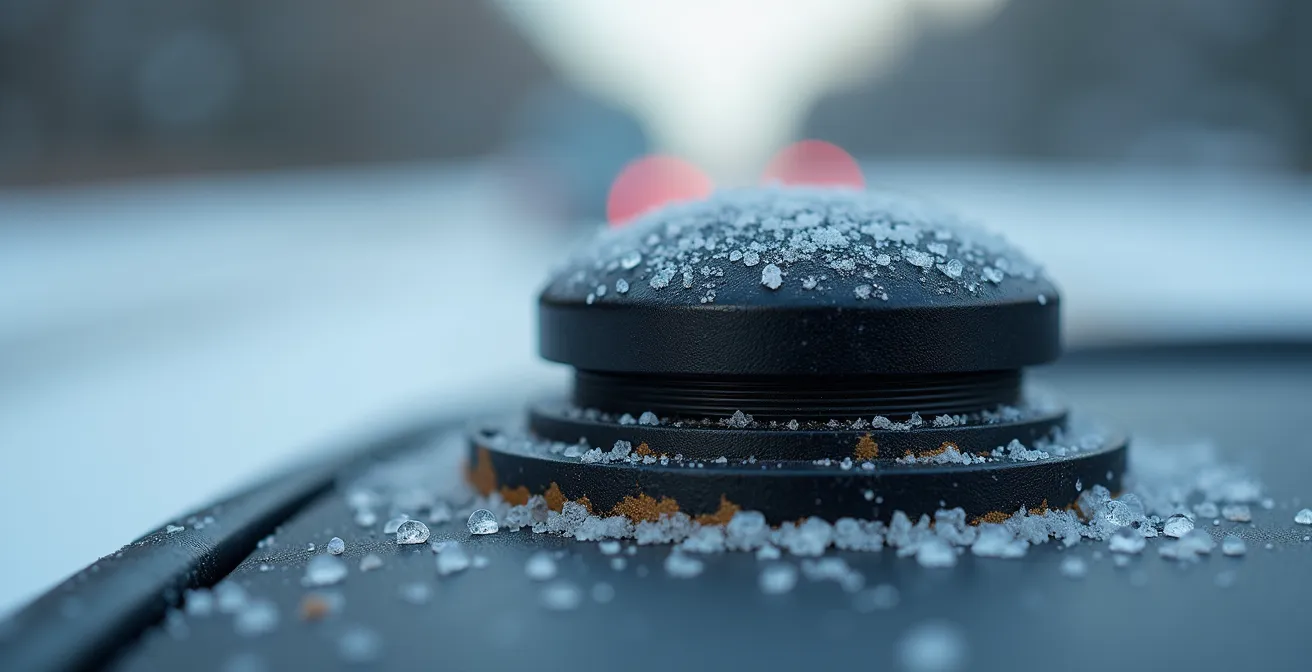
A sensor that is off by just a few millimetres can have its angle of view thrown off significantly over a distance. At 100 metres, that tiny misalignment could mean the radar is looking at the next lane over instead of the car directly in front of you. This is why recalibration after any front-end work is not just recommended—it’s mandatory for safety. A body shop cannot, in good conscience, return a vehicle to you without ensuring these critical safety systems are functioning as designed. This non-negotiable step adds hundreds of dollars to what used to be a simple bumper repair, another example of the calibration penalty that inflates claim costs and, consequently, insurance premiums. As noted by UniglassPlus, most insurers in Canada do cover these costs if you have the right coverage, but it’s an expense that ultimately contributes to the overall rate pool.
Why Your Dashboard Sensors Fail Faster in Winter Conditions?
If you’re a Quebec driver, you’re familiar with the “Winter Tax”—the toll that our harsh winters take on vehicles. ADAS sensors are particularly vulnerable. The constant barrage of snow, ice, and corrosive road salt can lead to premature failure or persistent malfunction. Cameras mounted on the windshield can be blinded by frost or slush, while radar sensors in the grille can get caked with ice, blocking their signals. You’ll often see a “Sensor Blocked” or “Safety System Unavailable” message on your dashboard, precisely when you might need the system most.
The science is clear: winter conditions drastically reduce a vehicle’s ability to stop. Snowy roads can have a friction coefficient as low as μ = 0.3, severely limiting traction. While ADAS can be programmed to adapt to these conditions, its effectiveness plummets when its “eyes”—the sensors—are compromised. This increased failure rate during the highest-risk season is a major variable in an insurer’s risk calculation for Quebec. It’s another factor that tempers the potential discounts for ADAS. A system that is unreliable for four to five months of the year cannot be valued as highly as one that performs consistently year-round.
Your Pre-Winter ADAS Maintenance Checklist
- System Health: Ensure ADAS systems and sensors are regularly maintained and calibrated before winter arrives.
- Camera Lens Prep: Apply a quality hydrophobic coating to the exterior of the forward camera lens area on the windshield to help repel slush and ice.
- Radar Cleaning: Routinely clean radar sensor panels on the grille with a soft cloth to remove salt and grime buildup; never use an ice scraper.
- Housing Inspection: Visually inspect plastic sensor housings for cracks or damage from calcium chloride, which can allow moisture to penetrate.
- Driver Vigilance: Never rely solely on ADAS, especially in poor weather. Always remain vigilant and prepared to take full control of the vehicle.
Key Takeaways
- The cost of ADAS recalibration after minor repairs (windshields, bumpers) often negates potential insurance discounts.
- Quebec’s harsh winter conditions (snow, ice, salt) frequently cause sensors to malfunction, reducing their reliability and value.
- Disabling or ignoring faulty ADAS systems can create significant liability issues in the event of an at-fault accident.
Why Does Replacing a Windshield Cost $1,000 on a Car With ADAS?
The $1,000 windshield replacement is the ultimate poster child for the hidden costs of ADAS. What used to be a straightforward $300-$400 job has ballooned into a significant expense that catches many vehicle owners by surprise. The reason is twofold. First, the glass itself is more expensive. It’s not just a piece of laminated glass anymore; it’s an integral part of a complex sensor system, often with specific coatings and precise mounting brackets for the camera. Using cheaper, aftermarket glass can interfere with the camera’s operation.
Second, and more significantly, is the mandatory calibration. As we’ve discussed, once the new windshield is in, the camera must be recalibrated to ensure it sees the world correctly. This is a multi-step process involving specialized targets and software. The combination of expensive OEM-quality glass and the lengthy, technical calibration process is what drives the price past the $1,000 mark, especially on luxury or newer models. This table breaks down how the costs accumulate.
This cost breakdown, based on data from Canadian auto glass specialists, clearly shows how the total expense can escalate. As seen in a recent cost analysis, ADAS calibration is an often-overlooked but significant part of the total bill.
| Component | Cost Range | Details |
|---|---|---|
| Basic windshield | $150-500 | Without ADAS features |
| ADAS windshield | $500-1000 | OEM glass with sensor areas |
| Calibration | $150-600 | ADAS calibration is an often-overlooked expense; complexity affects costs |
| Total on a luxury vehicle | $2000+ | Premium materials, complex installation, and extensive ADAS calibration |
So, before you sign on the dotted line for that new car, have a frank conversation with your insurance broker. Ask specifically about coverage for ADAS recalibration. Understanding this financial equation is the real key to managing your automotive costs in Quebec—far more than the promise of a simple discount.